
Why Use Concentrated Shampoo Bars? Benefits and Trade-offs
Quick Summary
Concentrated shampoo bars deliver a large amount of cleansing agent in a small, low-water block, so one bar lasts roughly 50 to 70 washes. They replace several bottles of liquid shampoo, which is mostly water, and they are easy to pack for travel.
- A 70g bar is rated for approximately 50 to 70 washes.
- Bars have very low water content, so nearly every gram is working ingredient.
- Wet the bar and rub it between wet hands to build lather before applying to the scalp.
- Rinse thoroughly, then rinse again until the water runs clear to avoid waxy residue.
- Lather builds gradually, so expect an adjustment period during the first few uses.
Table of Contents
- What Makes a Shampoo Bar Concentrated
- Shampoo Bar vs Liquid Shampoo: A Side-by-Side Comparison
- Benefits of Concentrated Shampoo Bars for Waste, Cost and Travel
- How to Use a Shampoo Bar Without Waxy Residue
- How Long a Shampoo Bar Lasts and What Affects It
- Shampoo Bars for Waxy Hair and Hard Water: Troubleshooting
- Pros and Cons of Concentrated Shampoo Bars, and Whether to Make the Switch
- Frequently Asked Questions
What Makes a Shampoo Bar Concentrated
Last Updated: November 24, 2026
Most people hear "concentrated" and assume it is a marketing word. In shampoo bars, it describes something specific and measurable: the bar delivers a large amount of cleansing agent in a small, low-water block. A single 70g bar is rated for approximately 50 to 70 washes. Liquid shampoo, by comparison, is mostly water. That difference in dose per wash, not the size of the product, is what "concentrated" actually means.
Why water content matters
Water content is the main difference between a bar and a bottle. Liquid shampoo is typically a large share water, with the actual cleansing ingredients making up a small fraction. A solid bar carries very little water, so almost every gram is working ingredient. This is also why a bar lasts so much longer per wash: you are not paying to ship, store, or rinse away water.
Low water content has a practical consequence you can see in the shower. A bar needs to be wet and rubbed between the hands before it lathers, and the lather is built up gradually rather than appearing instantly. Thinking of the bar as concentrated rather than "less product" helps set realistic expectations for the first few uses.
Concentration is not the same across all bars
Not every bar is equally concentrated, and the label rarely tells you directly. Two bars of the same weight can behave very differently depending on what else is in the formula.
A useful way to judge concentration before you buy is to read the ingredient list in order. Ingredients are listed by weight, so the further down the surfactants appear, the less concentrated the cleansing system is likely to be. A bar that lists a surfactant as the first or second ingredient is usually a more concentrated cleanser than one that leads with a butter or oil.
Formula types and pH
Concentration also interacts with formula type, and this is where many buyers get caught out. Shampoo bars generally fall into two families:
- Syndet bars are built from synthetic surfactants, the same class of cleansing agents used in liquid shampoo.
- Soap-based bars are made from saponified oils. They are typically alkaline, with a higher pH, and can leave a film or waxy feel, especially in hard water, because soap reacts with minerals to form insoluble deposits.
Matching the formula to your hair and scalp type matters more than the brand name on the wrapper. If you have a sensitive scalp, check the ingredient list and the product description before you buy, and patch-test if you are unsure.
Shampoo Bar vs Liquid Shampoo: A Side-by-Side Comparison
Here is how the two formats compare on the factors that usually decide the choice:
| Factor | Shampoo bar | Liquid shampoo |
|---|---|---|
| Water content | Very low | High |
| Packaging | Typically plastic-free | Usually plastic bottle |
| Approx. washes per unit | 50 to 70 per 70g bar | Varies by bottle size and hair length |
| Travel and carry-on | Easy, no liquid limits | Subject to liquid restrictions |
| Lather | Builds with wet hands | Immediate |
| Adjustment period | Often needed | Usually none |
Benefits of Concentrated Shampoo Bars for Waste, Cost and Travel
The strongest case for a concentrated bar is that it replaces several bottles of liquid shampoo. The Kali and Luna bars are sold in compostable packaging, and each bar is a concentrated bar that replaces multiple bottles of liquid shampoo.
That said, the sustainability case is more nuanced than "bars are always greener." Check the real environmental numbers behind shampoo bar waste savings.
Keep it on a draining soap dish between uses, and let it dry fully before packing it into a sealed container.
Cost per wash compared with liquid shampoo
The Kali Nourishing Shampoo Bar and the Luna Clarifying Shampoo Bar are each priced at $22.00 AUD for a 70g bar rated at approximately 50 to 70 washes.
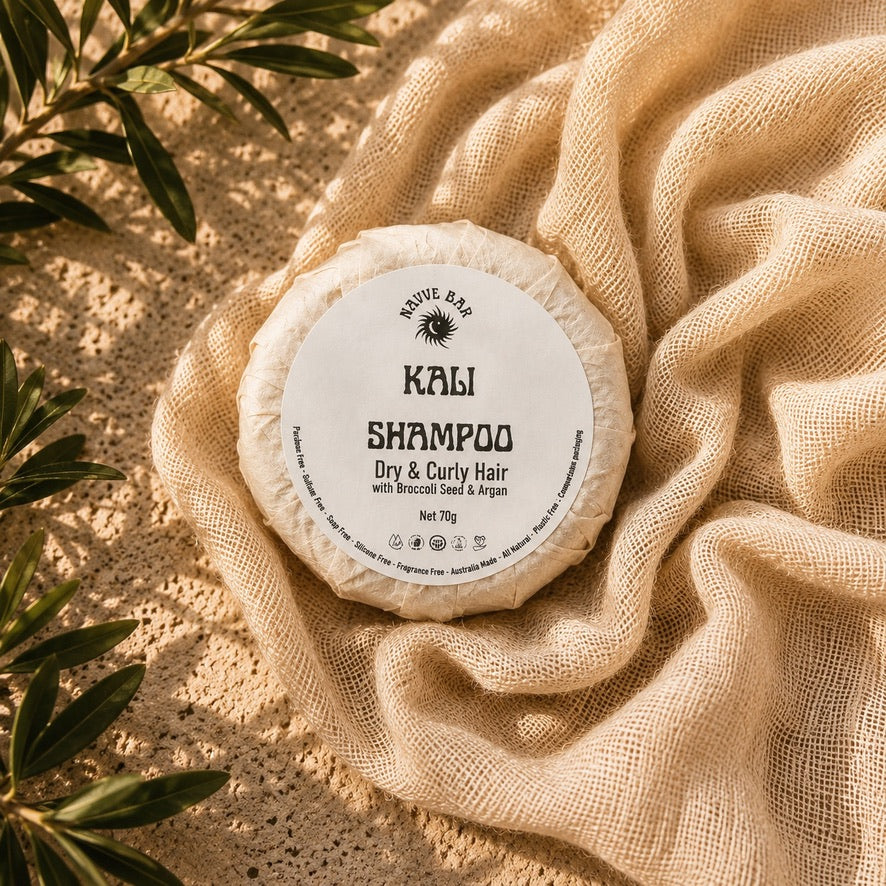
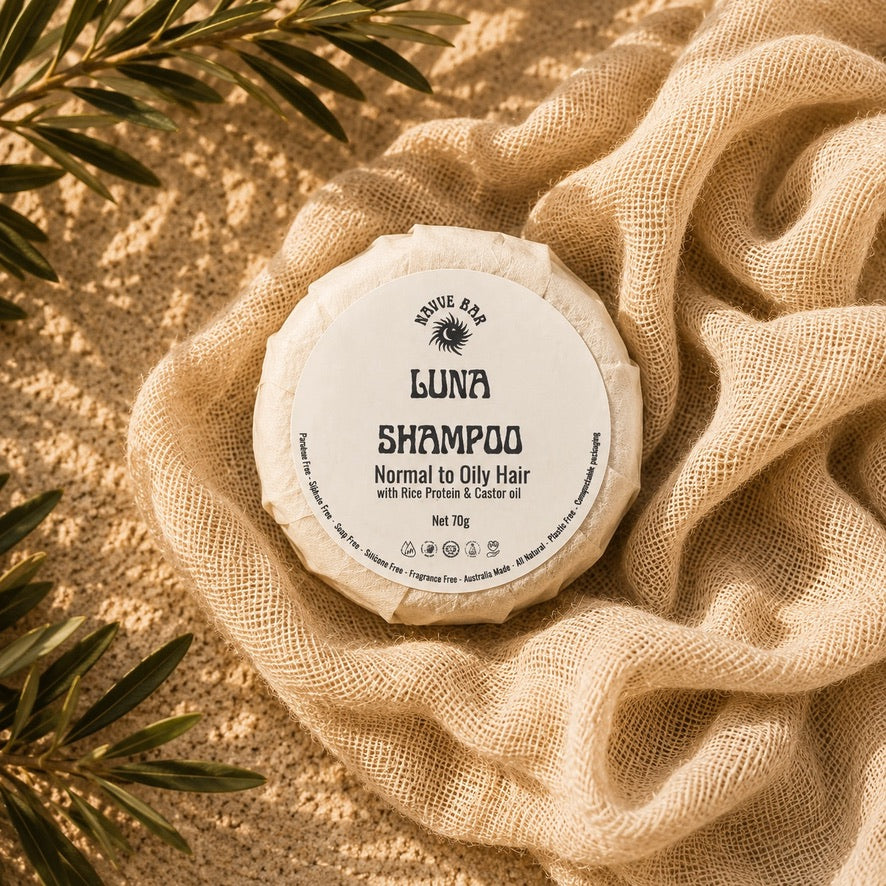
Your actual number will depend on hair length, how often you wash, and how well you keep the bar dry between uses. Longer or thicker hair uses more product per wash and will get fewer washes from a bar, which pushes the cost per wash up. Keeping the bar on a draining dish rather than sitting in water is one of the simplest ways to stretch its life and protect the value case.
Watch out: the "50 to 70 washes" figure is an approximate rating, so build your own estimate from your first bar rather than treating the range as a guarantee.
How to Use a Shampoo Bar Without Waxy Residue
Most waxy residue comes from technique rather than from the bar itself. Work through these steps:
- Wet your hair thoroughly. Dry hair does not lather a bar well and the bar will not spread evenly.
- Wet the bar. Rub it lightly under the water so the surface softens.
- Rub the bar between wet hands to build a lather, then apply it to the scalp, not the lengths.
- Massage the scalp with your fingertips, not your nails, for about a minute.
- Rinse thoroughly. Run the lather through the lengths on the way out, then rinse again until the water runs clear.
- Follow with a light rinse of diluted apple cider vinegar or cool water if your hair still feels coated.
The most common mistake is applying the bar directly to dry or barely wet hair and then rinsing only once. That leaves residue that builds up across washes and becomes the waxy feeling people complain about.
!Hands wetting a solid shampoo bar in a bright bathroom beside a dry soap dish and running water
How Long a Shampoo Bar Lasts and What Affects It
The 50 to 70 wash figure is a guide, not a guarantee. Results will vary with hair length, how often you wash, and how the bar is stored.
The honest answer is to track your first bar for a few weeks and adjust your expectations from there.
Shampoo Bars for Waxy Hair and Hard Water: Troubleshooting
Try these fixes before giving up on a bar:
- Use a diluted apple cider vinegar rinse once a week to clear residue.
- Rinse with slightly cooler water to help the cuticle lie flat.
- Reduce how much bar you use per wash, since less product leaves less film.
- Consider the Luna Clarifying Shampoo Bar, which is formulated for normal to oily hair.
Pros and Cons of Concentrated Shampoo Bars, and Whether to Make the Switch
Pros
- Lasts approximately 50 to 70 washes per 70g bar.
- Compostable packaging, and each bar replaces multiple bottles of liquid shampoo.
- Free from synthetic fragrance in the Kali and Luna formulas, which are naturally scented with essential oils.
Cons
- A transition period is common, and the first few washes may feel different from liquid shampoo.
- Hard water and the wrong formula can leave residue, so technique and matching matter.
- The upfront price per bar is higher than a single bottle, even though the cost per wash can be lower.
A concentrated bar is worth trying if you want less packaging and a simple routine. Find out how long the transition period takes before you commit. Start with one bar that matches your hair type. The Kali Nourishing Shampoo Bar is designed for dry, curly, textured or damaged hair and sensitive scalps, while the Luna Clarifying Shampoo Bar is designed for normal to oily hair. Find the bar that fits your routine at browse the Kali Nourishing Shampoo Bar and see how it performs over your first month.
Frequently Asked Questions
Are concentrated shampoo bars better than liquid shampoo?
The right choice depends on your hair type and how much packaging waste matters to you. A concentrated bar has very little water, and the Kali and Luna bars come in compostable packaging. The right choice depends on your hair type, how often you wash, and whether packaging waste matters to you. Trying a single bar is the simplest way to find out.
How many washes do you get from a shampoo bar?
Navve Bar's Kali Nourishing Shampoo Bar, a 70g bar, is rated for approximately 50 to 70 washes. Real results depend on hair length, how often you wash, and how well the bar is kept dry between uses. Longer or thicker hair will use more product per wash. Storing the bar on a draining dish, not sitting in water, helps it last as long as possible.
How do you use a shampoo bar without leaving your hair waxy?
Wet your hair fully, then rub the bar between wet hands to build a light lather before applying it to your scalp. Avoid rubbing the bar directly along your lengths, which can leave residue. Rinse thoroughly, and if your hair still feels coated, use a lighter amount next time.
Do shampoo bars work for sensitive scalps?
The Kali Nourishing Shampoo Bar is free from synthetic fragrances, sulphates and harsh detergents. Navve Bar's Kali Nourishing Shampoo Bar is formulated with botanical ingredients for sensitive or easily irritated scalps. Because individual reactions vary, patch test a new bar on a small area of skin first and stop using it if irritation develops.
