
How Long Do Shampoo Bars Last? A Practical Guide
Table of Contents
- Typical Lifespan: How Many Washes You Can Expect From a Shampoo Bar
- How Much Hair Length, Thickness and Washing Frequency Change the Count
- Estimating Your Own Lifespan: A Simple Calculation for Daily Washing
- Water Hardness, Lathering Technique and How Much Product You Actually Use
- How to Make a Shampoo Bar Last Longer: Storage and Care
- Shampoo Bar vs Bottled Shampoo: Cost Per Wash Compared
- Recognising When Your Bar Is Nearly Finished and Choosing Your Next One
- Frequently Asked Questions
Last Updated: November 22, 2026
Typical Lifespan: How Many Washes You Can Expect From a Shampoo Bar
If you're wondering how long do shampoo bars last, the short answer is about 50 to 70 washes for a standard 70g bar. That's a useful starting point. But the real number depends on how you use it, so it's worth understanding what drives it.
Think of the 50 to 70 wash figure as a baseline, not a guarantee. A bar used every other day will last far longer in calendar time than one used every morning. Many people find a bar lasts several months, though the exact timing varies from person to person.
- Standard 70g bar: approximately 50 to 70 washes
- Daily washing: roughly two to three months
- Every-other-day washing: several months
- Results shift with hair length, hair thickness and how much product you use
How Much Hair Length, Thickness and Washing Frequency Change the Count
Hair length and thickness are the biggest variables. Short, fine hair needs only a small amount of product per wash, so the bar stretches further. Long, thick or curly hair takes more lather and more product, so the same bar may last closer to the lower end of the range.
Washing frequency matters just as much. Someone who washes daily will use up a bar faster than someone who washes every second or third day. The bar itself does not change. The number of times you ask it to work does.
- Short or fine hair: the bar lasts toward the upper end of the range
- Long or thick hair: expect the lower end
- Daily washing: shorter calendar lifespan
- Less frequent washing: longer calendar lifespan
Estimating Your Own Lifespan: A Simple Calculation for Daily Washing
Most pages quote a single wash count and leave you to guess whether it applies to you. A fairer approach is to state the assumptions behind the number, then adjust them for your own routine. That way you can compare estimates across bars and against bottled shampoo without being misled by a headline figure.
The baseline assumption used here is a 70g bar delivering 50 to 70 washes when used by someone with shoulder-length, medium-thickness hair who washes every second day and glides the bar over wet hair rather than pressing hard. Every estimate below is a variation on that baseline, so you can see which lever is moving the number.
Step 1, Start with the bar's wash count. Use the manufacturer's figure if it gives one, or the 50 to 70 range for a standard 70g bar. Treat it as a midpoint (about 60) rather than a promise.
Step 2, Adjust for hair length and thickness. Short or fine hair typically needs less product per wash, so the bar stretches toward the upper end of its range. Long, thick or curly hair takes more lather and more passes, so plan for the lower end. A common pattern is a swing of roughly 20 to 30 per cent either side of the midpoint, though the only reliable figure is the one you measure on your own first bar.
Step 3, Divide by your washing schedule. Take your adjusted wash count and divide by how many times you wash each week. Sixty washes at seven washes a week is about 8.5 weeks; at three washes a week it is about 20 weeks. Divide weeks by 4.3 for calendar months.
Step 4, Adjust for household sharing. If two people share one bar, the wash count is consumed twice as fast in calendar time even though the per-wash cost is unchanged. Divide the calendar lifespan by the number of regular users.
Worked scenarios using the 60-wash midpoint:
| Routine | Washes per week | Approx. calendar life |
|---|---|---|
| Daily, short hair | 7 | About 9 to 11 weeks |
| Every second day, shoulder-length | 3.5 | About 17 weeks |
| Twice weekly, long thick hair | 2 | About 24 to 30 weeks |
| Two adults sharing, daily | 14 combined | About 4 to 5 weeks per bar |
Watch out: These figures assume the bar is dried between uses. A bar left damp will fall short of its wash count regardless of how carefully you do the arithmetic, so fix storage before you trust the estimate.
Track your first bar against the prediction. Note the start date, your wash frequency and the date the bar becomes awkward to hold. That single data point is worth more than any published average, and it lets you compare the next bar on a like-for-like basis.
Water Hardness, Lathering Technique and How Much Product You Actually Use
How much of the bar you dissolve per wash is the single biggest driver of lifespan after washing frequency, and it is governed by two things most guides skip: the minerals in your water and the way you build lather.
Hard water contains dissolved calcium and magnesium. These minerals react with the surfactants in soap-based bars to form an insoluble scum, which is why lather feels thin and why some people keep adding more product chasing a richer foam. The extra product does not improve cleaning; it simply goes down the drain and shortens the bar's life. Soft water lathers readily, so a smaller amount of bar does the same job. If you are on a rainwater tank or a softened supply, expect a bar to last toward the upper end of its range; if your kettle furs quickly, assume the lower end.
Lathering technique changes product use just as much. Two common approaches:
- Glide method: wet the hair fully, pass the bar over the scalp two or three times, then work the lather through with the fingers. This uses the least product because the bar touches only where it is needed.
- Hand-lather method: rub the bar between wet palms until a foam forms, then apply the foam. This feels gentler but typically dissolves more of the bar per wash because the whole surface is wetted and worked.
Neither method is wrong, but the hand-lather approach can consume noticeably more bar over a month. If your bar is vanishing faster than the wash count predicts, switch to the glide method before assuming the bar is at fault.
A simple diagnostic: if you need more than about three passes of the bar to cover your scalp, the problem is usually insufficient water on the hair or hard water, not too little product. Wet the hair thoroughly first, and if lather still will not build, a filtered shower head or a occasional clarifying rinse can reduce the mineral load without changing your bar.
Watch out: Do not compensate for thin lather by pressing the bar harder against the hair. Pressure abrades the bar and dissolves more product without improving cleaning, so it shortens lifespan for no benefit.
Keep a note of how many passes you use per wash for the first week. Most people find they can cut one pass without any loss of cleaning, which alone can add weeks to a bar's life.
How to Make a Shampoo Bar Last Longer: Storage and Care
Storage is the easiest way to extend a bar's life. The main enemy is standing water. A bar left sitting in a pool of water softens and wears away faster. Keep it on a draining soap dish, out of the direct spray, and let it dry fully between uses.
A sisal soap saver bag is another practical option. It holds the bar, lets water drain away and helps the bar last longer. Many people also keep bars on a ledge with some airflow rather than in a closed bathroom cabinet.
- Use a draining soap dish that lifts the bar off the surface
- Keep the bar out of the shower spray where possible
- Try a sisal soap saver bag to help the bar dry between washes
- Store bars in a ventilated spot rather than a sealed container
Watch out: Never leave the bar sitting in water or in a closed container while damp, as this speeds up softening.
Shampoo Bar vs Bottled Shampoo: Cost Per Wash Compared
Cost per wash is one of the clearest ways to compare the two. A shampoo bar that gives 50 to 70 washes spreads its price across all of them. Bottled shampoo is priced by volume, and how many washes you get depends on how much you pump out each time.
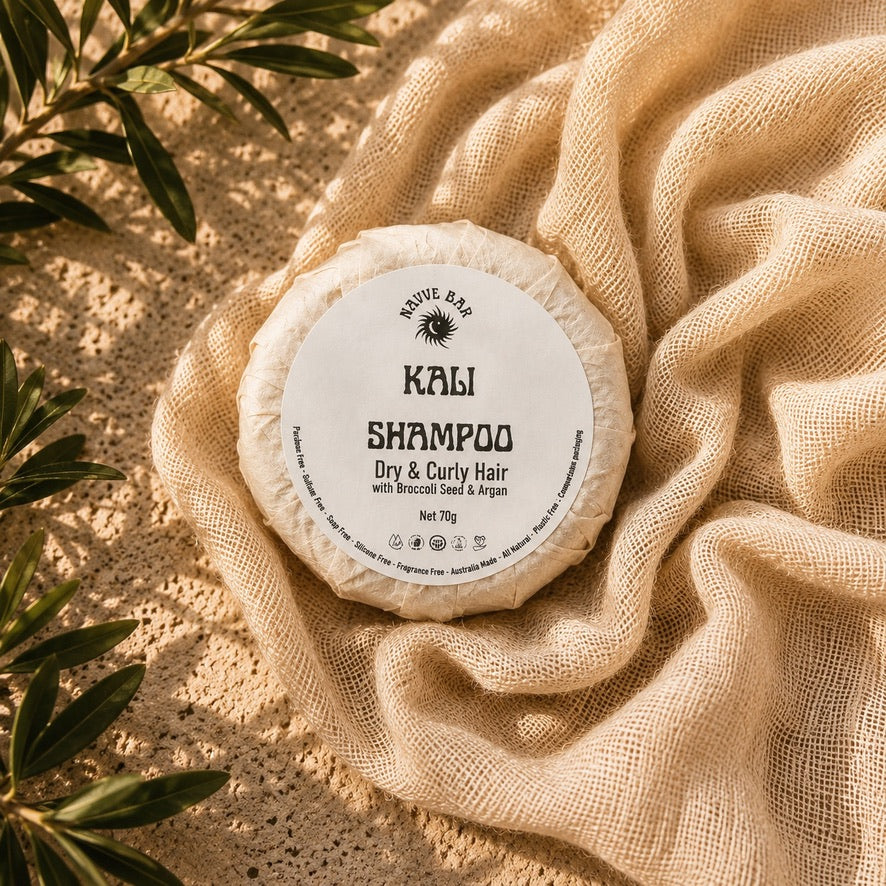
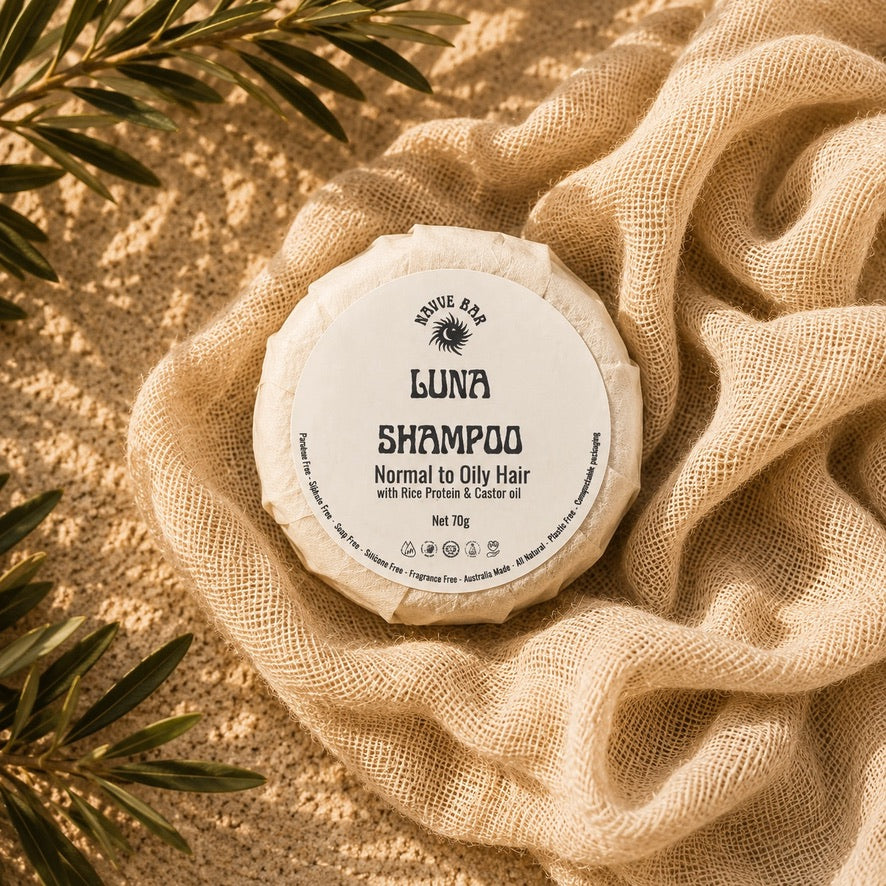
For a like-for-like comparison, divide the price of the bar by its expected washes, then do the same for your bottled shampoo based on how many washes one bottle gives you. The Navve Bar Kali Nourishing Shampoo Bar and Luna Clarifying Shampoo Bar are each $22.00 AUD for a 70g bar.
| Option | Price (AUD) | Expected washes | Approx. cost per wash |
|---|---|---|---|
| Kali Nourishing Shampoo Bar (70g) | $22.00 | 50 to 70 | $0.31 to $0.44 |
| Luna Clarifying Shampoo Bar (70g) | $22.00 | 50 to 70 | $0.31 to $0.44 |
| Bottled shampoo | Check your local price | Depends on your use | Calculate using your own bottle |
Compare the figures with the bottle you actually buy, using the same method. The result depends on how much product your hair needs.
Recognising When Your Bar Is Nearly Finished and Choosing Your Next One
A bar nearing the end of its life looks thinner, softer and more worn at the edges. When it becomes too small to hold comfortably in your hand, it is time to stop using it.
Before you buy again, match the bar to your hair. The Kali Nourishing Shampoo Bar suits dry, curly or damaged hair and sensitive scalps. The Luna Clarifying Shampoo Bar suits normal to oily hair and fine hair that needs body. Both are handcrafted in Melbourne, vegan and cruelty free, with compostable packaging.
Our advice is simple: track your first bar, see how long it actually lasts for you, then choose the next one to suit your hair. For more detail on storing bars between washes, read our storage guide. That way your next bar starts from a better-informed place.
Frequently Asked Questions
How many washes can you get from a shampoo bar?
Navve Bar's Kali and Luna bars are rated at approximately 50 to 70 washes each, though the real number depends on your hair length, how often you wash and how the bar is stored. Shorter, finer hair typically uses less product per wash, so a bar may last toward the upper end of that range. Thicker or longer hair often means more lather and more frequent use, which brings the count closer to the lower end. Keeping the bar dry between uses also helps it last longer, since a bar that sits in water dissolves faster.
How long does a shampoo bar last with daily use?
With daily washing, a 70g Navve Bar rated at 50 to 70 washes would last roughly seven to ten weeks. Most people do not wash their hair every day, so an every-other-day or twice-weekly routine stretches the same bar to several months. To estimate your own figure, divide the rated washes by the number of washes you do per week. Keep in mind that the estimate assumes you use a similar amount of product each time and store the bar well.
Does a shampoo bar last longer than a bottle of shampoo?
In most cases, yes, because a concentrated bar replaces several bottles of liquid shampoo. Navve Bar states that one bar can replace two to three plastic bottles, depending on how you use it. Because the lifespan depends on hair length, washing frequency and storage, the best way to compare is to work out cost per wash for your own routine rather than relying on a single figure.
How can you tell when a shampoo bar is finished?
A bar is nearing the end of its useful life when it becomes very thin or soft, when it no longer builds a lather with a little water, or when it breaks apart easily in your hand. You may also notice it sitting in a puddle of water in the dish, which shows it is dissolving between uses. At that point, a few final washes are still possible if you press the remaining pieces together, but a fresh bar will give you a more consistent lather.
