
Shampoo Bar Benefits for the Environment: Real Numbers
Quick Summary
A shampoo bar removes the plastic bottle from the bathroom almost entirely, which is where most of its environmental gain begins. Navve Bar states that each bar replaces 2-3 plastic bottles over its working life and lasts roughly 50-70 washes. Its packaging is plastic-free and either biodegradable or recyclable.
- Navve Bar states each bar replaces 2-3 plastic bottles over its working life.
- A bar removes the bottle, pump and often the outer carton from your bin.
- Navve Bar's packaging is plastic-free and either biodegradable or recyclable.
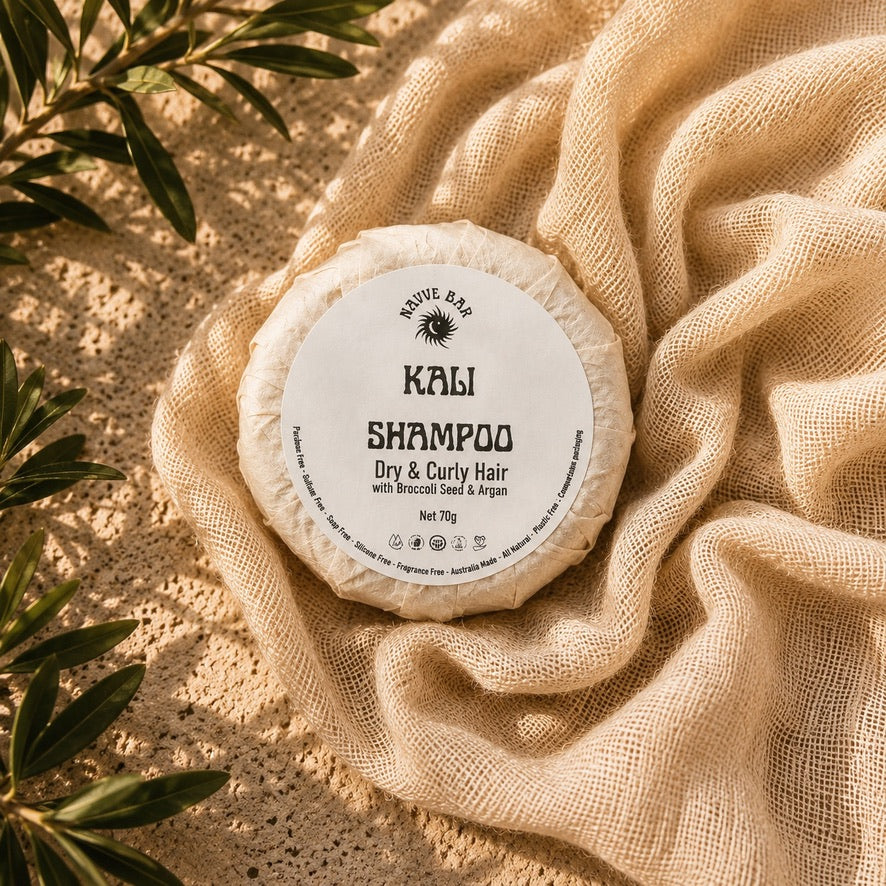
- The Kali bar is listed at 70g with approximately 50-70 washes.
- Compostable wrappers only help if they reach a facility that accepts them.
Table of Contents
- Why Shampoo Bars Cut Plastic Waste
- Shampoo Bars vs Liquid Shampoo Environmental Impact
- Are Shampoo Bars Biodegradable? What Happens at End of Life
- How Long a Shampoo Bar Lasts and What Affects It
- How to Store a Shampoo Bar So It Lasts Longer
- Pros, Cons and Honest Trade-Offs of Going Bar-Only
- Choosing Your First Bar: Kali, Luna or Bulan
- Frequently Asked Questions
Why Shampoo Bars Cut Plastic Waste
A shampoo bar removes the plastic bottle from the bathroom almost entirely, and that is where most of the environmental gain begins. Navve Bar's handcrafted bars are sold with plastic-free, biodegradable or recyclable packaging.
The scale of the problem is worth keeping in mind. Plastic bottles are among the most common forms of bathroom packaging, and most of them are made from virgin plastic that is rarely recovered at a high rate.
What a bottle-free bar actually removes from the bin
A bottle-free bar removes the bottle itself, the pump or cap, and often the outer carton. For a household that switches all of its shampoo and conditioner to bars, that can mean several plastic items cleared from the bin every few months. The waste reduction is real, but it depends on the bar being used to the end rather than discarded partway through.
Packaging materials: cardboard, compostable wrappers and recyclable options
Bar packaging varies, and the material matters for the final impact. Navve Bar's packaging is plastic-free and either biodegradable or recyclable, so the wrapper can follow an end-of-life path rather than joining the plastic stream. Cardboard and paper wraps are common across the category, but they only help if they are sent to recycling or compost rather than landfill. Check your local council's guidance on what can go in your recycling and green waste.
Shampoo Bars vs Liquid Shampoo Environmental Impact
Most comparisons of bars and bottles stop at the packaging, which makes the conclusion look foregone. A fairer approach is to compare the two formats stage by stage, ingredients, manufacturing, packaging, transport, use and disposal, and to state the assumptions behind each stage. No single figure settles the question, because the result shifts with the formula, the shipping distance and how the user washes.
A like-for-like comparison, stage by stage
A workable framework looks like this:
- Functional unit. Compare per wash, not per product. One bar listed at approximately 50-70 washes is the denominator; a bottle's wash count depends on dose, which varies widely between users.
- Ingredients. Liquid shampoo is largely water, so the same cleansing effect requires more mass of product. Bars carry less water, but the surfactants and botanical ingredients still have agricultural and manufacturing footprints that packaging-focused articles rarely assess.
- Manufacturing. Energy use per wash depends on the factory, the batch size and the formula. A bar is not automatically lower-impact to make; the concentration helps mainly because less water is processed and shipped.
- Packaging. This is the clearest difference. A bar sold in a compostable wrapper or a paper carton removes the bottle, pump and often the outer carton. A bottle usually combines several plastic types, which complicates recycling.
- Transport. Because a bar contains little water, it weighs less per wash. Lighter parcels reduce transport emissions per unit, but the total effect depends on distance, courier and how many items travel together. A bar shipped alone by air can erase the advantage of a bottle shipped in bulk by road.
- Use. Hot water, wash frequency and dose drive the use-phase footprint. A long, hot shower dominates the energy use of either format, so the bar-versus-bottle difference is small next to how the hair is washed.
- Disposal. The wrapper goes to compost or recycling; the bottle goes to recycling, landfill or litter, depending on local infrastructure.
What the numbers can and cannot tell you
Published figures for bar-versus-bottle savings vary widely because the studies use different assumptions. A common pattern is that packaging and shipping dominate the visible difference, while ingredient sourcing and use-phase energy are either excluded or estimated. Treat any single percentage as an estimate for a stated scenario, not a universal rule. Where a brand quotes a figure, look for the functional unit, the boundary of the study and whether it was independently reviewed.
How many bottles one bar can replace
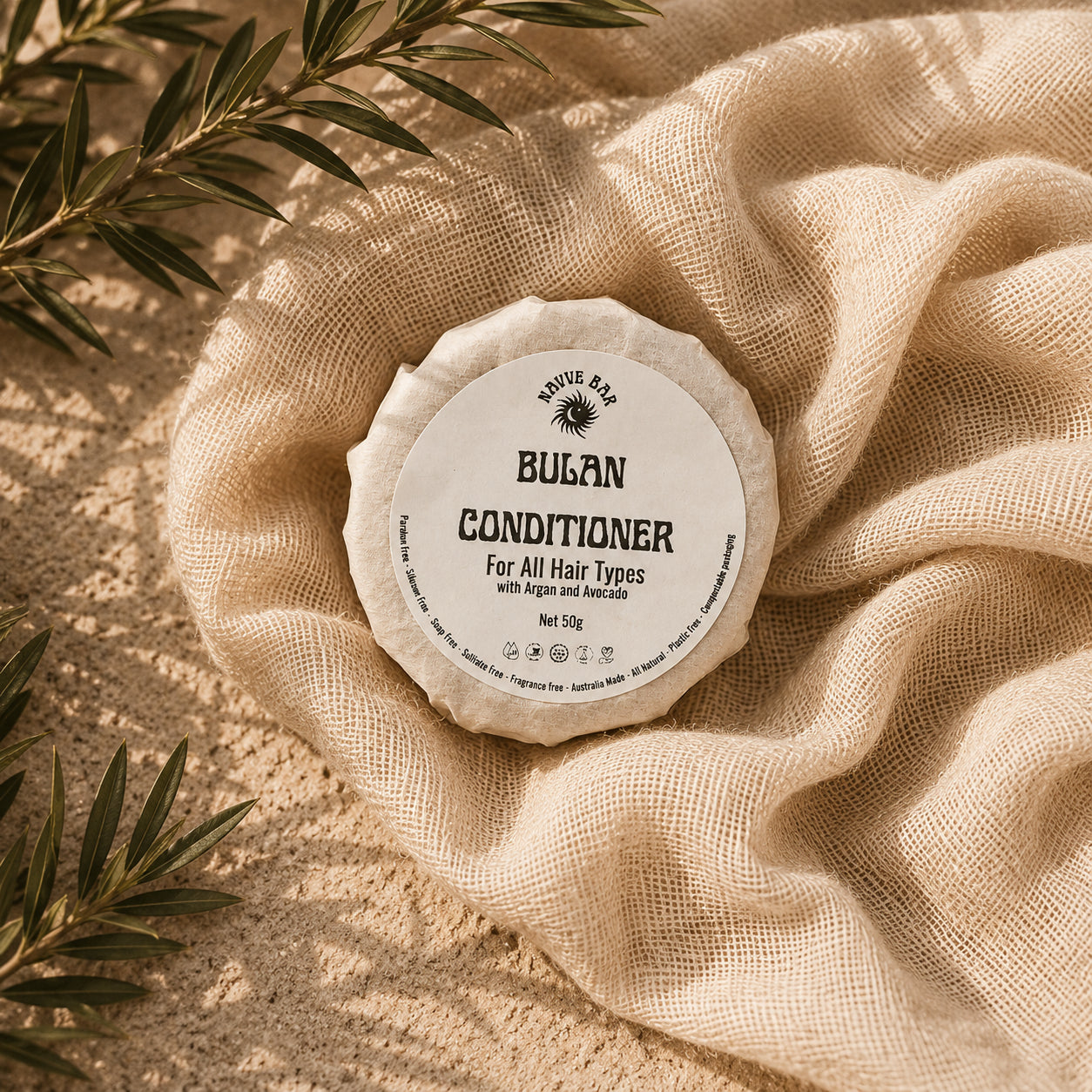
Navve Bar states that each bar replaces 2-3 plastic bottles, and that a bar lasts roughly 50-70 washes. The Kali bar is listed at 70g with approximately 50-70 washes, and the Bulan conditioner at 50g with approximately 60-80 applications. These are estimates: hair length, how often you wash, and how well the bar is stored between uses all change the result. A household that washes daily with long hair will get through a bar faster than a short-haired user who washes twice a week, so the bottle count is a range rather than a fixed figure.
Where the comparison is genuinely close
If a bottle is refilled from a bulk container and recycled through a well-served kerbside scheme, the packaging advantage of a bar narrows. If a bar is shipped long distances in small parcels and stored badly, its advantage shrinks too.
The article's stage-by-stage comparison of bars and bottles can be scanned as follows.
| Stage | Bar vs bottle | Key point |
|---|---|---|
| Packaging | Bar removes bottle, pump and often carton | Clearest difference |
| Ingredients | Liquid is mostly water | Bars need less product mass |
| Transport | Bars weigh less per wash | Total depends on distance and courier |
| Use | Hot water and frequency dominate | Bar-vs-bottle gap is small |
| Disposal | Wrapper to compost or recycling | Depends on local infrastructure |
Are Shampoo Bars Biodegradable? What Happens at End of Life
Biodegradability is two separate questions: what happens to the product after it rinses down the drain, and what happens to the packaging after it leaves the bathroom. The two should be judged separately, because a compostable wrapper says nothing about the bar's ingredients and vice versa.
What happens to the bar after rinsing
A solid bar is mostly surfactants, oils, butters and botanical ingredients. Once diluted in a shower, the residue enters the wastewater system and is treated at a sewage plant or, in some settings, a septic system. Readily biodegradable surfactants generally break down in well-run treatment plants, but the rate depends on the molecule, the plant's capacity and the water temperature. Check the ingredient list and the brand's own disposal guidance rather than assuming a solid format guarantees a clean rinse-off.
What happens to the packaging
Bar packaging is usually one of three types: a paper or cardboard carton, a compostable film, or a coated wrapper. Each has a different end-of-life path.
- Cardboard and paper. Recyclable through kerbside recycling if clean and dry. Grease or product residue can contaminate the paper stream, so scrape and dry before binning.
- Compostable film. Only breaks down in a commercial composting facility that accepts the specific standard the film is certified to. Most home compost bins do not reach the required temperatures, and many kerbside recycling schemes reject compostable film because it contaminates the plastic stream.
- Coated or laminated wrappers. Often not recyclable and not compostable, so they go to landfill. A wrapper that feels plastic-like is worth checking against the council's guidance before assuming it is compostable.
Check your local council's guidance on what can go in your recycling and green waste, because acceptance varies by municipality and by facility.
The end-of-life realities most articles skip
A compostable wrapper only helps if it reaches a facility that accepts it. In many areas, compostable packaging is not collected at kerbside, so it ends up in landfill, where it may break down slowly and without oxygen.
Watch out: a compostable wrapper placed in the wrong bin can contaminate a recycling load, which is worse than sending it to landfill deliberately.
What to do with a part-used bar
A bar that is too small to lather can be pressed onto a new bar, grated into a jar, or used as a hand soap. Using it to the end is the simplest way to keep the product's end-of-life consistent with its low-waste premise.
How Long a Shampoo Bar Lasts and What Affects It
A bar's life depends on how you use it. Hair length, washing frequency and water hardness all change how quickly it wears down. The 70g Kali bar is listed at approximately 50-70 washes, and a 50g bar will usually last fewer washes than a 70g one.
Storage matters a great deal. A bar left sitting in a pool of water dissolves faster, while one that is allowed to dry between uses lasts longer.
How to Store a Shampoo Bar So It Lasts Longer
Storing a bar well is the easiest way to get the full number of washes out of it. Follow these steps:
- Rinse the bar after use, then shake off excess water.
- Place it on a draining dish, not in the bottom of the shower.
- Keep it out of direct water spray where possible.
- Let it dry fully before the next wash, ideally overnight between sessions.
- Store it in a dry spot if you travel, and use a breathable container rather than a sealed case.
A solid shampoo bar resting on a draining wooden soap dish beside a shower wall, natural morning light, no people in frame.
Pros, Cons and Honest Trade-Offs of Going Bar-Only
Going fully bar-only has clear advantages. You remove bottles from your routine, the product is concentrated, and the ingredient list is short. The trade-offs are real too. Bars also need drying time, which some households find inconvenient on busy mornings.
Pros: less plastic, concentrated formula, fragrance-free options, lighter shipping. Cons: possible waxy residue, needs drying between uses, upfront cost per bar.
Many people find that using a bar for shampoo and a conditioner bar together works better than mixing formats.
Choosing Your First Bar: Kali, Luna or Bulan
Navve Bar's range offers options for different hair needs, so choose by what your hair and scalp need rather than by product name alone.
- Kali Nourishing Shampoo Bar (AUD $22.00): designed for dry, curly or damaged hair and sensitive scalps. Scented with rosemary and bergamot essential oils.
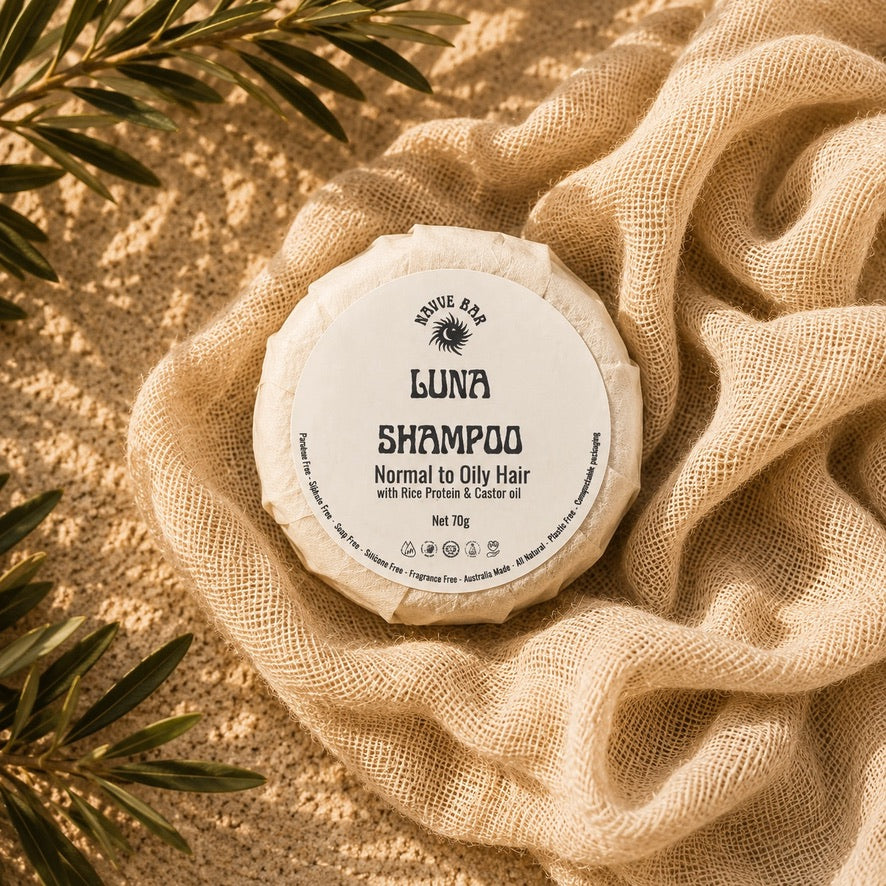
- Luna Clarifying Shampoo Bar (AUD $22.00): suited to normal to oily hair, with rosemary and lemongrass essential oils.
- Bulan Conditioner (AUD $19.00): a conditioner bar for dry, damaged or colour-treated hair, scented with lemongrass essential oil.
If you have a sensitive scalp and dry lengths, Kali is the most direct starting point. If your hair gets oily quickly, Luna is the better match.
Frequently Asked Questions
Are shampoo bars better for the environment than bottled shampoo?
Generally, yes, but the advantage depends on the whole lifecycle rather than the bar alone. A bar removes the plastic bottle, uses far less water in the product itself, and weighs less to ship, which lowers transport emissions. Its packaging is usually cardboard or a compostable wrapper. The trade-offs are real: production still uses energy and ingredients, and a bar only delivers its benefit if it is used to the end and stored so it does not dissolve.
Are shampoo bars biodegradable?
Biodegradable does not mean a product vanishes quickly or without residue. Navve Bar packaging is plastic-free and either biodegradable or recyclable, and the Kali, Luna and Bulan bars are sold in compostable packaging. Any leftover bar fragments can go into the bin or be composted where your local facilities allow. Check the packaging and the product listing for what applies to the specific bar you buy.
How long does a shampoo bar last?
Navve Bar's 70g shampoo bars are rated at approximately 50 to 70 washes, and the 50g Bulan conditioner bar at approximately 60 to 80 applications. Actual life depends on hair length, how often you wash, how much product you use, and how well the bar dries between uses. Longer hair and daily washing shorten the life, while keeping the bar on a draining dish extends it considerably.
How do I store a shampoo bar so it lasts longer?
Keep the bar out of standing water. Rinse it briefly after use, shake off excess water, and place it on a draining dish or soap tray where air can reach all sides. Avoid leaving it in a sealed container or on the bottom of a shower caddy while damp. Letting it dry fully between washes is the single biggest factor in how long a bar lasts.
