
Sulfate Free Shampoo Bars for Thick Hair: Top Picks
Table of Contents
- Why Sulfate Free Shampoo Bars Suit Thick Hair
- Best Shampoo Bars for Thick Hair: Quick Comparison
- Shampoo Bar Ingredients for Thick Hair: What to Look For
- How to Use a Shampoo Bar on Thick Hair
- Shampoo Bar Residue in Thick Hair: Causes and Fixes
- Cost Per Wash and Packaging Trade-Offs
- Which Sulfate Free Shampoo Bar Fits Your Thick Hair?
- Conclusion
- Frequently Asked Questions
Last Updated: October 16, 2026
Why Sulfate Free Shampoo Bars Suit Thick Hair
Thick hair holds more water, product and residue than fine hair, so the cleanser you choose matters more. Sulfate free shampoo bars are solid, concentrated cleansers built without harsh detergents that strip natural oils.
At Navve Bar, we handcraft concentrated bars in small batches for people with sensitive scalps who want thick, healthy-looking hair without a bottle of detergent. A gentle, pH balanced cleanser respects the scalp barrier while still lifting oil and build-up.
Most guides treat "sulfate free" as a single category. It isn't. Whether a bar leaves thick hair soft or waxy comes down to the surfactant system, the oils and the pH.
Best Shampoo Bars for Thick Hair: Quick Comparison
The right bar for thick hair depends on your scalp type, not just your hair texture. Here's how our range lines up before we go into detail.
| Bar | Best For | Size | Approx. Washes | Price |
|---|---|---|---|---|
| Kali Nourishing Shampoo Bar | Dry, curly or damaged thick hair | 70g | 50-70 | $22.00 |
| Luna Clarifying Shampoo Bar | Normal to oily thick hair | 70g | 50-70 | $22.00 |
| Freya Purifying Shampoo Bar | Oily, congested or build-up prone | 70g | 50-70 | $22.00 |
| Hera Soothing Shampoo Bar | Sensitive, itchy or flaky scalps | 70g | 50-70 | $22.00 |
| Bulan Nourishing Conditioner Bar | Dry, damaged or colour-treated hair | 50g | 60-80 | $19.00 |
How We Selected These Bars
We built this list around thick-hair performance, not marketing claims. Each bar had to meet four criteria: a soap-free, sulfate free formula, a rich lather that reaches the scalp through dense hair, botanical oils that nourish without heavy residue, and compostable or recyclable packaging. We also weighed scalp sensitivity, a bar that cleanses gently but thoroughly matters more than one that simply smells good.
Shampoo Bar Ingredients for Thick Hair: What to Look For
Start with what's left out. A genuine sulfate free bar avoids the harsh detergents that create a squeaky, stripped feeling, plus parabens, silicones, phthalates and artificial fragrances.
Then look at what's in it. For thick hair, you want a balance of cleansing and conditioning agents:
- Coconut-derived cleansers for a creamy lather that lifts oil without stripping
- Shea butter and castor oil to nourish and add slip, which helps with detangling
- Botanical extracts and essential oils for scent and scalp support, such as rosemary, bergamot, tea tree and peppermint
- A pH balanced, soap-free base so the cuticle stays smooth and the scalp isn't left tight
How to Verify a Sulfate-Free Claim on the Label
Most guides tell you to "avoid sulfates" without showing you how. Here is the practical method.
Step 1: Scan the first five ingredients. Surfactants (the actual cleansers) usually appear near the top of an INCI list because they make up the bulk of the formula.
Step 2: Learn the sulfate names. The common ones to look for are sodium lauryl sulfate (SLS), sodium laureth sulfate (SLES), ammonium lauryl sulfate (ALS) and ammonium laureth sulfate (ALES).
Step 5: Treat marketing words as marketing words. "Natural", "chemical-free" and "toxin-free" are not regulated claims. The Australian Competition and Consumer Commission guidance on ingredient claims explains that businesses must be able to substantiate claims they make about their products, so a reputable brand should be able to tell you exactly which surfactant it uses if you ask.
Ingredient Shortlist by Thick-Hair Concern
Rather than treating thickness as one hair type, match the ingredient profile to the concern you actually have:
| Thick-hair concern | Ingredient to prioritise | Ingredient to avoid |
|---|---|---|
| Dryness and brittleness | Shea butter, cocoa butter, castor oil | High-foaming sulfates |
| Oiliness at the roots | Gentle coconut-derived cleansers, tea tree, peppermint | |
| Frizz | pH balanced syndet base, jojoba, argan-type oils | True soap bases |
| Buildup | Clarifying surfactants | Silicones (dimethicone, amodimethicone) |
| Scalp sensitivity | Fragrance-free or essential-oil-light formulas | Synthetic fragrance |
That's the difference between a bar that works on thick hair and one that merely claims to: identify the surfactant, and check the conditioning agents match your concern.
How to Use a Shampoo Bar on Thick Hair
Thick hair needs a different technique than fine hair. The goal is to get lather to the scalp, where oil sits, without dragging the bar through the lengths and creating tangles.
- Wet thoroughly. Thick hair takes longer to saturate. Give it a full rinse so the water reaches the scalp.
- Lather in your hands first. Rub the bar between wet palms until you have a creamy lather.
- Work it into the scalp. Use fingertips, not nails, to massage the lather through the roots.
- Let the lather travel. As you rinse, the suds run down and clean the lengths without extra scrubbing.
- Repeat only if needed. Most thick hair needs one wash; a second pass suits very oily scalps.
- Follow with conditioner. Thick hair benefits most from a nourishing conditioner bar on the mid-lengths and ends.
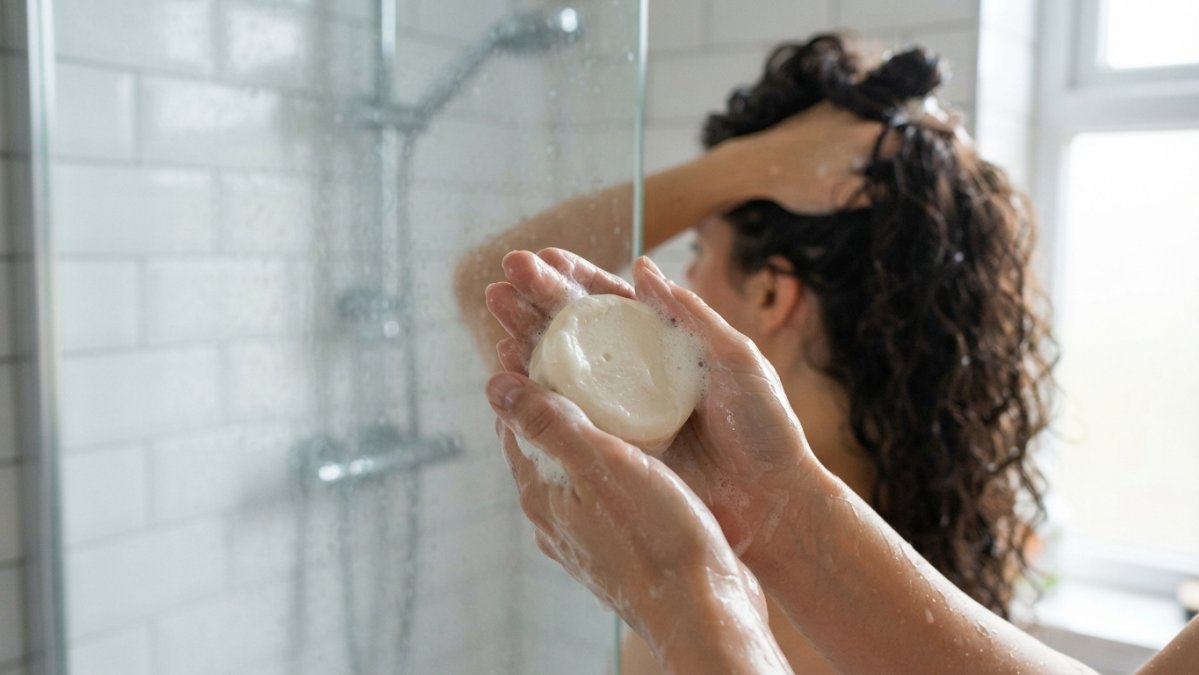
Application Technique for Dense or Long Hair
Section your hair first: part it into four or five sections and apply lather to the scalp along each part line, getting cleanser where it's needed without over-working the lengths. For long thick hair, keep the bar away from the ends entirely, they get cleaned as the lather rinses through.
Shampoo Bar Residue in Thick Hair: Causes and Fixes
Residue is the most common complaint with thick hair, and it's almost always a technique or formula issue rather than a fault with bars in general. The usual culprits: a true soap base, hard water, or not rinsing long enough.
| Problem | Likely Cause | Fix |
|---|---|---|
| Waxy, coated feeling | True soap base or hard water | Switch to a soap-free, pH balanced bar |
| Greasy roots after washing | Bar not reaching the scalp | Section hair and lather at the roots |
| Dull, heavy lengths | Product build-up | Use a clarifying bar occasionally |
| Dry, straw-like ends | Over-cleansing | Keep shampoo off the ends, condition after |
Hard water can leave mineral residue that reads as waxy; a clarifying bar resets the hair and a final cool rinse smooths the cuticle. If you're new to bars, expect a short transition period while your scalp adjusts its oil production.
Cost Per Wash and Packaging Trade-Offs
A concentrated bar works out cheaper per wash than most people expect. Each 70g bar delivers roughly 50-70 washes and replaces multiple plastic bottles of liquid shampoo.
Do the maths on a $22.00 bar across 60 washes and you're paying well under a dollar per wash, with compostable packaging and nothing heading to landfill, unlike a liquid shampoo that runs out faster, arrives in plastic and often needs a matching conditioner bottle.
What Actually Shortens a Bar's Life
The 50-70 wash estimate assumes the bar is stored dry between uses. In practice, three things cut that number down:
- Wet storage. A bar left in a puddle or on a shower shelf dissolves from the bottom up. A draining dish or a spot outside the direct spray makes the biggest difference.
- Washing frequency. Someone who washes daily will finish a bar in roughly two months; someone who washes twice a week stretches the same bar to six months or more.
- Hair length and density. Very long, very thick hair uses more lather per wash, so the bar depletes faster. Sectioning the hair (see the application section) reduces waste because you use less product to reach the scalp.
Hard Water and the Transition Period
This is the part most guides leave out, and it matters for thick hair in particular.
Hard water contains dissolved minerals, mainly calcium and magnesium. When they meet the fatty acids in a true soap bar they form soap scum, which leaves the waxy, dull coating on hair.
There's also a transition period. If you've used a conventional sulfate shampoo, your scalp has adapted to having its oils stripped every wash and may overproduce oil briefly when you switch. Most people settle within a wash or two, though some report a week or two.
The Honest Trade-Offs
Bars need dry storage, and the first few washes require a technique adjustment. Some people also prefer the familiar slip of a liquid. For thick hair, the payoff is a gentler cleanse, less waste and a bar that lasts, provided you store it properly.
Which Sulfate Free Shampoo Bar Fits Your Thick Hair?
Match the bar to your scalp, and the hair follows. Here's how we'd choose:
- Dry, curly or damaged thick hair: Kali Nourishing Shampoo Bar, deeply nourishing with rosemary and bergamot
- Normal to oily thick hair: Luna Clarifying Shampoo Bar, balances oil while adding natural body
- Oily, congested or build-up prone: Freya Purifying Shampoo Bar, a deep, refreshing cleanse
- Sensitive, itchy or flaky scalps: Hera Soothing Shampoo Bar, calming with tea tree and peppermint
- Dry, damaged or colour-treated: pair any bar with the Bulan Nourishing Conditioner Bar
If you're unsure, start with the bar that matches your scalp condition rather than your hair length, thick hair responds to scalp care first. For a full routine, our Kali Nourishing Shampoo Bar and Bulan Nourishing Conditioner Bar cover dry, damaged or colour-treated hair from wash to finish.


Australian Government Department of Health and Aged Care information on cosmetic ingredients
Conclusion
Choosing a sulfate free shampoo bar for thick hair comes down to matching the formula to your scalp, then getting the application technique right. Sort those two things and thick hair stops being a battle with residue and frizz.
At Navve Bar, every bar is handcrafted in small batches with purposeful botanical ingredients, free from synthetic fragrances, sulfates and harsh detergents. Each lasts 50-70 washes and arrives in compostable packaging, so you care for your hair and cut plastic at once.
Find your bar and give your thick hair the gentle, nourishing cleanse it has been missing.
Frequently Asked Questions
Are sulfate free shampoo bars suitable for thick hair?
Yes. Sulfate free shampoo bars work well on thick hair because they cleanse without stripping natural oils, which thick hair needs to stay hydrated. The key is choosing a pH-balanced, soap-free formula that lathers properly and rinsing thoroughly to prevent residue. Bars with nourishing botanical ingredients like coconut oil and shea butter help keep dense strands soft and manageable.
What should I look for in a shampoo bar for thick hair?
Look for sulfate-free surfactants that create a rich lather, moisturising oils such as coconut oil or shea butter, and a pH-balanced soap-free formula. Check that the bar is concentrated enough to last 50 to 70 washes, and confirm it suits your scalp type, whether normal, oily, or sensitive.
How do you use a shampoo bar on thick hair?
Wet your hair thoroughly, then rub the bar between your palms or directly along your scalp in sections. Work the lather through your roots first, then finger-comb it down the lengths. Because thick hair traps product, rinse longer than you think you need to, sectioning your hair if possible. Follow with a conditioner bar on mid-lengths and ends.
Why does shampoo bar residue build up on thick hair?
Thick hair has more surface area and density, so lather and product can get trapped near the scalp and mid-lengths if rinsing is rushed. Hard water makes this worse because minerals in the water react with soap-based bars and leave a waxy film. Using a soap-free, pH-balanced bar and rinsing in sections reduces residue significantly.
How often should you wash thick hair with a shampoo bar?
Most people with thick hair wash every two to three days. Sulfate free shampoo bars cleanse gently enough that daily washing will not strip your scalp, but thick hair takes longer to dry and style, so spacing washes is practical. If your scalp gets oily quickly, a clarifying bar for normal to oily hair works well on alternate days, while a nourishing bar suits dry or colour-treated thick hair.